
10 Dhul Hijjah — Jamrat al-Aqabah
Nusuk's current journey places the return to Mina and pelting of Jamrat al-Aqabah on 10 Dhul Hijjah, the Day of Eid, using seven pebbles.
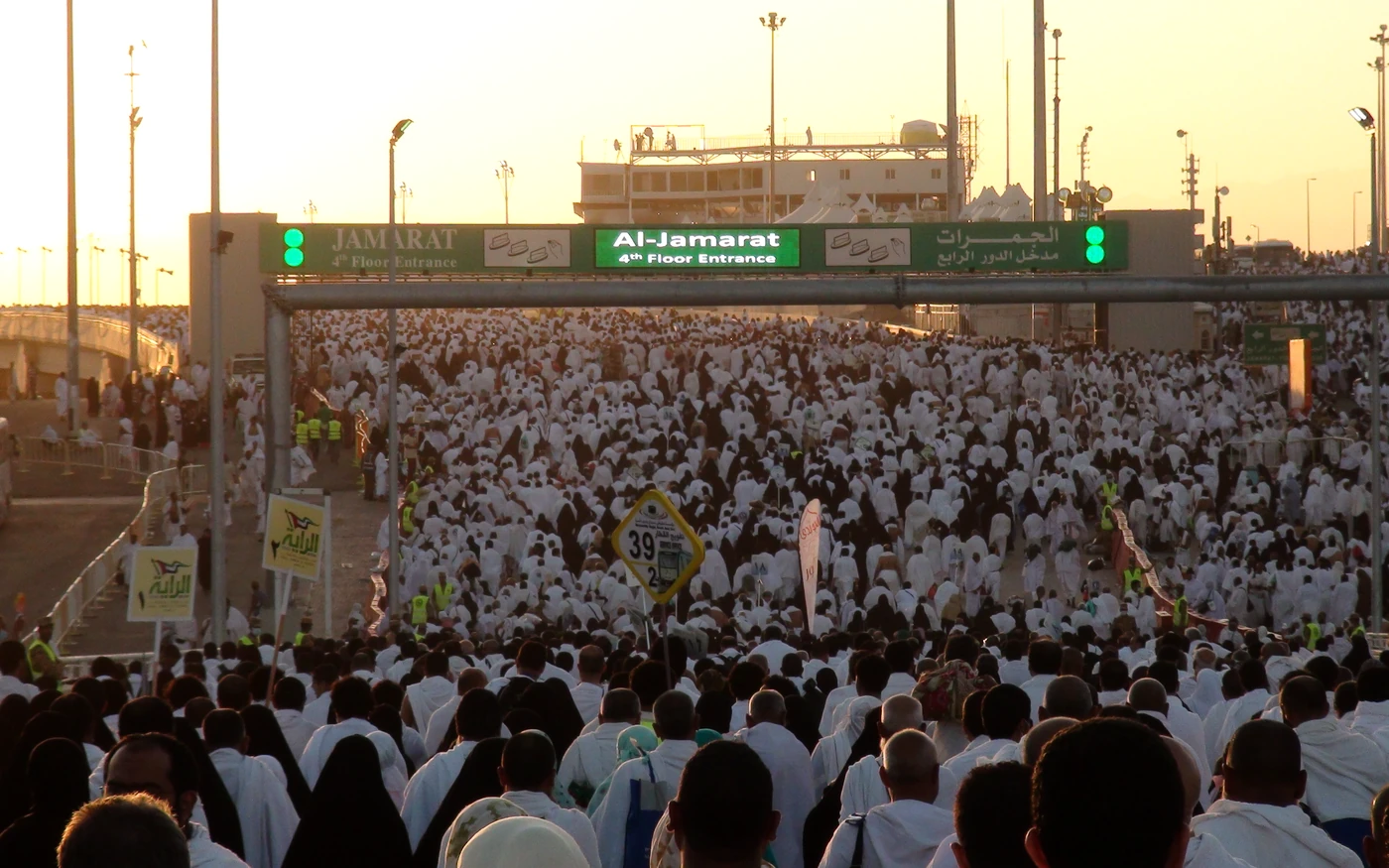
Jamarat takes place during one of Hajj's busiest movement periods. Understand where it fits in the sequence, then follow the assigned timing and route from your authorized organizer and Saudi authorities.
Open the guide ↓Reviewed 14 August 2026. SaudiWelcome is an independent educational platform. Hajj operations and assigned timings can change; follow current Saudi authorities and your authorized Hajj organizer.
Nusuk's current journey places the return to Mina and pelting of Jamrat al-Aqabah on 10 Dhul Hijjah, the Day of Eid, using seven pebbles.
Nusuk then places pelting of the three Jamarat on 11 and 12 Dhul Hijjah, and optionally the 13th. The three are identified as the largest, middle and smallest Jamarat.
Crowd management is critical at Jamarat. The Ministry publishes a dedicated Jamarat awareness guide. Follow your assigned schedule, route and organizer instructions rather than choosing a time independently.
Stay with your group plan, follow directional signs and instructions, and avoid stopping in active pedestrian flows. Do not push against crowd movement to reach a particular position.
Know your meeting point, carry only essentials and keep your phone charged. If your group provides specific transport or walking instructions, use those current instructions.
The rites around 10 Dhul Hijjah also include the offering and shaving or trimming of hair, followed by Tawaf al-Ifadah according to the Hajj sequence and your qualified guidance.
Use SaudiWelcome for orientation, then verify operational instructions and detailed religious guidance before acting.
Nusuk places it on 10 Dhul Hijjah after returning toward Mina.
Nusuk places them on the 11th and 12th, and optionally the 13th of Dhul Hijjah.
The area handles major pilgrim flows, so current organizer and official crowd-management instructions are important for safe movement.